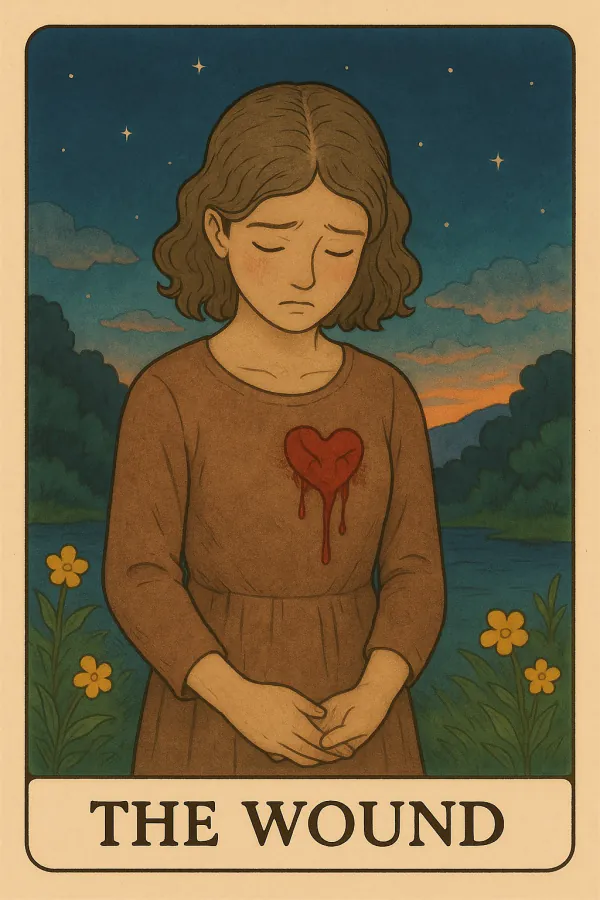
The Wound
Past pain, healing journey
This card reflects past hurt and highlights your ongoing journey toward emotional healing. It encourages you to acknowledge and process old pains for ultimate liberation.
The Wound points to an old hurt that's still shaping how you live today. The betrayal that taught you to keep one foot out of every relationship. The teacher who called your writing dull, so you stopped writing. The family rule that feelings were to be kept private. When this card turns up, that injury is active again, often set off by something small: a tone of voice, a smell, a familiar kind of silence. Acknowledging it isn't wallowing. It's the step that lets it close. Healing doesn't mean forgetting what happened. It means the old wound stops making today's decisions for you, and you get them back.
On the card
A girl with wavy brown hair stands at dusk with her eyes closed and her hands clasped low in front of her. On the chest of her plain brown dress is a red heart, dripping. She isn't hiding it, and she isn't pressing on it. Behind her, a river runs under a darkening sky still lit orange at the horizon, and yellow flowers grow on either side. The hurt is visible, and so is the world carrying on around her.
In love & relationships
Old hurts steer current relationships, and the Wound shows you how. If you're together, notice the reaction that's bigger than the moment: panic when they're late, coldness after a small criticism. Tell your partner where it comes from; being understood takes out some of the sting. If you're single, you're drawn to people who echo an old wound, or avoiding anyone close enough to reopen it. Healing first doesn't mean never dating. It means dating with your eyes open.
In work & career
Professionally, the Wound is the old rejection that still flinches inside you: the layoff, the harsh review, the business that didn't make it. It shows up as over-preparing, not applying, or apologizing before you've done anything wrong. Name the original moment, privately, and notice how often you're still reacting to it. The colleague in front of you now isn't the boss who hurt you then. Treat them, and yourself, accordingly.
For personal growth
The Wound asks you to tend the hurt instead of toughing it out. That means taking it seriously enough to get real support, whether from a good friend, a therapist or people who've been through the same thing. It means no longer pretending you're fine to keep others comfortable. Wounds close from the inside, slowly. Your job is to keep them clean and stop pressing on them.
Yes or no?
No
No, not until the old hurt is dealt with. The answer you want depends on something that's still raw, and pushing ahead now repeats the injury. Give it time and care first. Then the question looks different, and so does the answer.
As advice
This week, when an old hurt flares, from a song, a name, a place, don't push it away. Put your hand flat on your chest for ten slow breaths, the way you'd steady a friend. It sounds small. It tells the old wound someone is finally paying attention.
Questions to reflect on
- What wounds need healing?
- How do old hurts affect your present?
- What would healing look like?
- How do you tend to your wounds?